20:4 Fasting: The Warrior-Style Eating Window Guide
Learn how 20:4 fasting works, who it suits, what to eat in a four-hour window, and how to progress safely from 16:8 without burning out.
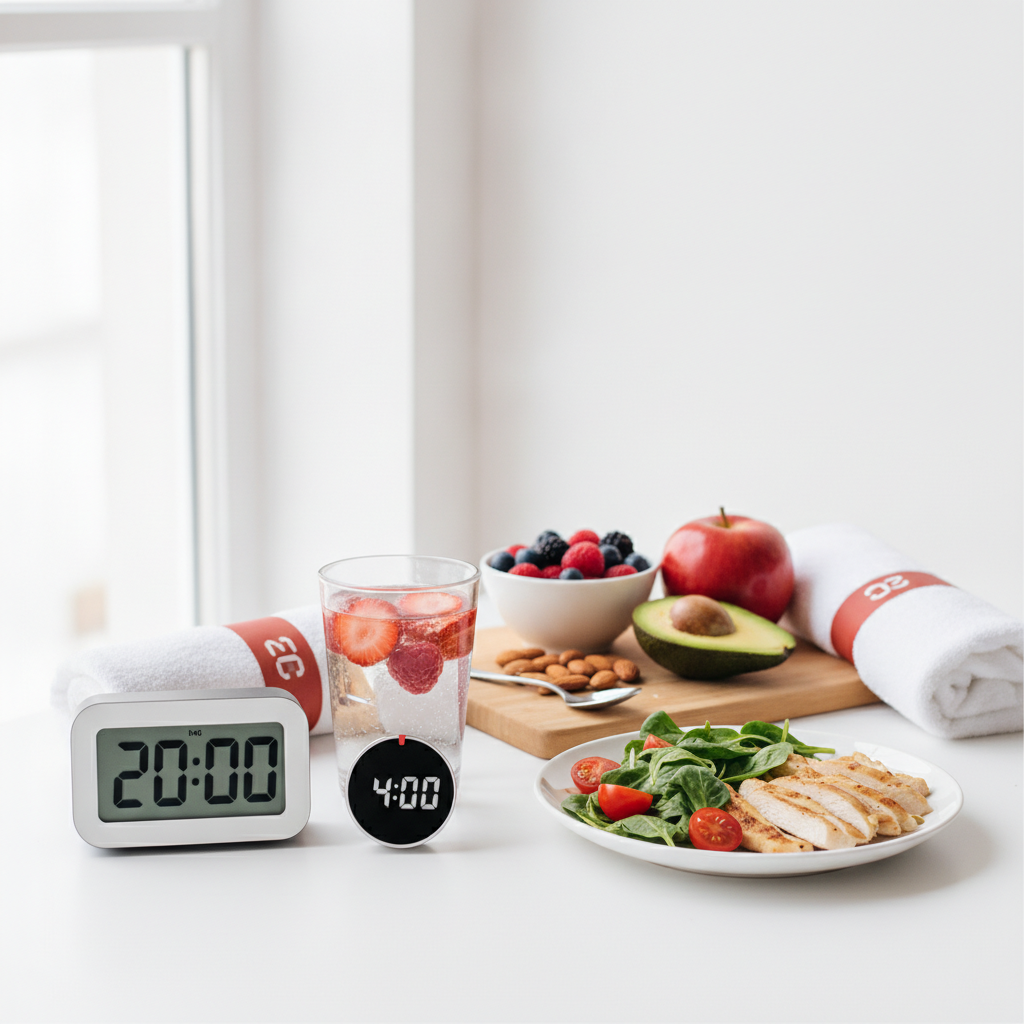
Twenty hours of fasting. Four hours of eating. That is 20:4 fasting—one of the more aggressive daily intermittent fasting schedules and a close cousin of popularized “warrior” style patterns. Done well, it can simplify food decisions and extend the metabolic quiet period far beyond beginner 16:8. Done poorly, it becomes a nightly binge compressed into a frantic window. This guide explains how 20:4 actually works, who should consider it, how to progress into it, and how to fuel the four hours so health—not heroics—stays in charge.
I recommend 20:4 only after someone has adapted to 16:8 or 18:6 without disordered urgency around food. It is a precision tool, not a personality.
What Is 20:4 Fasting?
The ratio means twenty consecutive hours with no caloric intake and a four-hour eating window every day (or on chosen days). Fluids without calories—water, black coffee, unsweetened tea—are typically allowed during the fast. Inside the window, you consume your day’s nutrition, often as one large meal plus a smaller satiety buffer, or two tightly spaced meals.
An example schedule: eat from 4:00 p.m. to 8:00 p.m., then fast until 4:00 p.m. the next day. Another: 2:00 p.m. to 6:00 p.m. for people who want an earlier circadian finish. The clock placement matters as much as the length—late windows that end at midnight fight sleep for many patients.
20:4 sits between classic one-meal-a-day (OMAD, roughly 23:1) and 18:6. You get more feeding flexibility than OMAD and a longer fast than 18:6. That middle position is why some athletes and busy professionals prefer it once beginner schedules feel too “snacky.”
The Physiology of a Twenty-Hour Daily Fast
Extending from sixteen to twenty fasting hours increases time spent in lower insulin states and typically pushes further into fat oxidation for many metabolically flexible adults. Glycogen depletion is more complete than in short TRE windows, and ketone production often rises later in the fast—though individuals vary widely based on prior carbohydrate intake and activity.
Appetite signaling adapts again when you move from 16:8 to 20:4. Expect a second adaptation phase: late-morning hunger may return for a week even if you previously conquered breakfast skipping. Habitual ghrelin peaks shift toward your new feeding time when the schedule is consistent.
Muscle maintenance depends on what happens in the four hours—not on fasting bravado. Total daily protein must still be hit. Condensing protein into a short window is achievable but requires intentional meals; it does not happen automatically because the clock looks impressive.
Circadian caution applies. A four-hour window starting at 8:00 p.m. places most calories near melatonin onset. Prefer windows that end at least two to three hours before bed when life allows. Metabolic health is not only about fasting length; meal timing relative to sleep counts.
Who Should Try 20:4—and Who Should Not
Reasonable candidates include healthy adults already comfortable with 18:6, people with stable energy on long morning fasts, those who prefer fewer meals for schedule simplicity, and individuals without a history of binge-restriction cycles.
Poor candidates include pregnancy and breastfeeding; adolescents; underweight individuals; people with eating disorder history; those with diabetes on medications that risk hypoglycemia without careful supervision; and beginners who have never practiced shorter TRE. Also reconsider if your job demands high cognitive output in late morning and you know you underperform when underfuelled—physiology is personal.
Women who notice pronounced cycle-phase hunger may use 20:4 selectively (for example mid-follicular) and widen the window in higher-demand phases rather than forcing identical aggression daily. Flexibility with tracking beats rigid ideology.
How to Progress Into 20:4 Without Burning Out
Do not jump from grazing to 20:4 overnight. Progression example across three to four weeks:
- Stabilize 16:8 for at least two weeks.
- Move to 18:6 for one to two weeks.
- Trial 20:4 on three nonconsecutive days while keeping 18:6 on others.
- Increase 20:4 frequency only if sleep, training, mood, and social life remain intact.
During progression, keep protein targets and strength training consistent so you isolate the variable of window length. If workouts collapse, sleep fragments, or evenings become binge-coded, step back to 18:6. Retreat is data, not failure.
Hydration and sodium awareness matter more as fasting extends. Headaches in the first week of 20:4 often reflect fluid and electrolyte habits plus caffeine timing—not proof that the method is impossible.
Use a tracker so “twenty hours” is measured, not estimated after a stressful day. The Easy Fast app is a simple fasting tracker with one-tap start, clear remaining time, and local on-device history—privacy-focused by design. When you are experimenting with aggressive windows, objective logs prevent accidental 14-hour fasts labeled as 20:4 in your head.
What to Eat in a Four-Hour Window
Four hours is enough for excellent nutrition if you refuse junk-volume tactics.
Protein first. Aim for a full day’s protein across one large meal and one smaller feeding—or two solid meals ninety minutes apart. Examples: large salmon plate plus yogurt and berries later; steak and vegetables plus a cottage cheese side; tofu stir-fry plus eggs later in the window. Spreading protein slightly beats one protein spike followed by dessert-only calories.
Vegetables for volume. Fill half the plate so satiety hormones get bulk and micronutrients. Cooked vegetables often sit better if your stomach has been empty twenty hours.
Smart carbohydrates matched to training. Potatoes, rice, fruit, or legumes around workouts support performance. Ultra-low-carb bravado inside 20:4 is optional, not mandatory, and can worsen thyroid-adjacent symptoms or training quality for some.
Fats for satisfaction, not deep-fryer chaos. Olive oil, avocado, nuts in measured amounts. A four-hour window filled with fried appetizers recreates the metabolic pattern you were trying to escape—only faster.
Meal rhythm inside the window. Popular structures: (A) one primary dinner and a planned dessert-or-dairy closer; (B) early-window lunch-style meal and late-window dinner; (C) OMAD-leaning single plate with a protein shake edge. Choose one and repeat for two weeks before optimizing.
Break the fast calmly. The first bites after twenty hours should not be a bakery blitz. Start with protein and plants, then add starch. Pace: put the fork down between bites. Gastric discomfort is common when people inhale 2,000 calories in twenty-five minutes.
Training, Sleep, and Social Life on 20:4
Strength training fits best near or inside the eating window for many people—late afternoon sessions followed by the feast window is a common pattern. Fasted low-intensity cardio in the morning is usually tolerable once adapted. High-intensity intervals deep in the fasted state can work for some advanced individuals and feel miserable for others; performance logs decide.
Sleep is non-negotiable. If 20:4 pushes dinner to 10:30 p.m., move the window earlier or widen it. Chronic sleep loss will overpower fasting benefits for appetite regulation.
Social dinners require planning. Either shift the four hours to cover the event, take a scheduled wider window that day without guilt, or eat a protein-focused portion at the event and return to baseline tomorrow. Rigid 20:4 that destroys relationships is a bad health plan.
Mistakes Specific to 20:4 Fasting
Using the window as a binge container. If loss of control appears night after night, this schedule is wrong for you right now.
Undereating protein and calories chronically. Aggressive fasting plus accidental low intake drives fatigue and muscle loss.
Changing the window daily by many hours. Adaptation needs consistency.
Stacking 20:4 with high stress and low sleep. Stress load is cumulative.
Comparing to OMAD influencers. Your cortisol, sex, sport, and meds are not theirs.
A Sample Day on 20:4 That Prioritizes Nutrition
Here is a concrete template many clients adapt. Fast from 8:00 p.m. until 4:00 p.m. Hydrate through the morning with water; black coffee optional before noon if sleep remains intact. Light walk midday. Resistance training at 3:15 p.m. if that timing fits, or shift training to early window.
At 4:00 p.m., meal one: large salad greens, grilled chicken or tofu, roasted vegetables, potatoes or rice scaled to training, olive oil and vinegar. Eat slowly over twenty-five minutes. At 6:30 p.m., meal two: Greek yogurt or cottage cheese with berries and a small handful of nuts, or eggs with remaining vegetables. Kitchen closed at 8:00 p.m. sharp.
On a rest day, shrink the starch portion and keep protein high. On a social evening, slide the entire four-hour block to cover the dinner—say 5:00 p.m. to 9:00 p.m.—rather than eating random hors d’oeuvres at 3:00 and calling it discipline. Sliding the window as a unit preserves the twenty-hour fast length more cleanly than nibbling for eight hours “just this once” without a plan.
Women who notice luteal-phase appetite increases may keep 20:4 for half the month and use 18:6 for the remainder. That is strategic periodization, not failure. Track symptoms beside your fasting log so patterns become obvious after two cycles rather than guessing from memory.
When to Widen the Window Again
Exit criteria should be written before intensity identity takes over. Widen back to 18:6 or 16:8 if sleep consistently degrades, if training loads drop for more than two weeks, if evening binge urges increase, if menstrual function changes in concerning ways, or if mood volatility rises. Aggressive fasting that costs recovery and mental health is a bad trade for a fashionably short eating window.
Some people use 20:4 as a short intensive block—four to eight weeks—then return to a maintenance TRE schedule. Others never need 20:4 at all and thrive indefinitely on 16:8. Both outcomes can be successes. The measure is whether your protocol still serves metabolic goals, muscle, and life quality simultaneously. Recheck that measure every month with sleep notes, training logs, and your fasting history rather than relying on motivational mood alone. If friends ask how you “survived” twenty hungry hours, tell them the honest version: the hours became ordinary after adaptation, and the four eating hours only worked because the meals were planned.
Frequently Asked Questions
Is 20:4 fasting the same as the Warrior Diet?
They overlap in spirit—long fast, short feed—but “Warrior Diet” branding includes specific food sequencing ideas popularized in older diet books. 20:4 is simply the timing ratio. You do not need proprietary warrior rules to practice a twenty-and-four clock schedule with balanced meals.
Can beginners start with 20:4?
Generally no. Master 16:8 or 18:6 first so hunger adaptation, protein planning, and psychological relationship with food are already stable. Jumping to 20:4 as a first fast amplifies side effects and binge risk.
How many meals should I eat in four hours?
One to two. Three full meals in four hours usually recreates hurried grazing. Two intentional feedings leave room for protein distribution without constant chewing.
Will 20:4 help me lose fat faster than 16:8?
Only if it creates a more sustainable calorie deficit and better adherence for you. Some people eat less automatically with 20:4; others overeat in the window. Fat loss is still energy balance plus protein and training over time—not magic from the number twenty.
Can I drink coffee during the twenty-hour fast?
Black coffee is commonly allowed in intermittent fasting definitions. Calories from milk, sugar, and cream break the fast. If multiple coffees wreck your sleep or stomach on 20:4, cut volume or move the last cup earlier.
What if I feel weak or dizzy on 20:4?
Stop the aggressive schedule. Eat a balanced meal, hydrate, and return to a wider window. Persistent symptoms warrant medical evaluation. Dizziness is not a fasting merit badge.
How do I track 20:4 accurately?
Log the exact start after your last caloric intake and the first bite that ends the fast. Apps remove guesswork. Easy Fast keeps timings and history on your device so you can review weekly adherence privately without cloud account requirements.
20:4 fasting can be an effective advanced intermittent schedule when nutrition density is high, sleep is protected, and binge patterns stay absent. Progress gradually, eat like an adult in the four hours, and let objective tracking—not internet dare culture—set your pace. If you are ready to run a precise window, download Easy Fast and let a simple, privacy-focused timer hold the twenty hours steady while you hold nutrition standards equally high.