The 5:2 Diet Explained: How the Two-Day Fast Week Works
Learn how the 5 2 diet works, what to eat on fasting days, who it suits, and how to track a sustainable 5:2 intermittent fasting routine for lasting results.
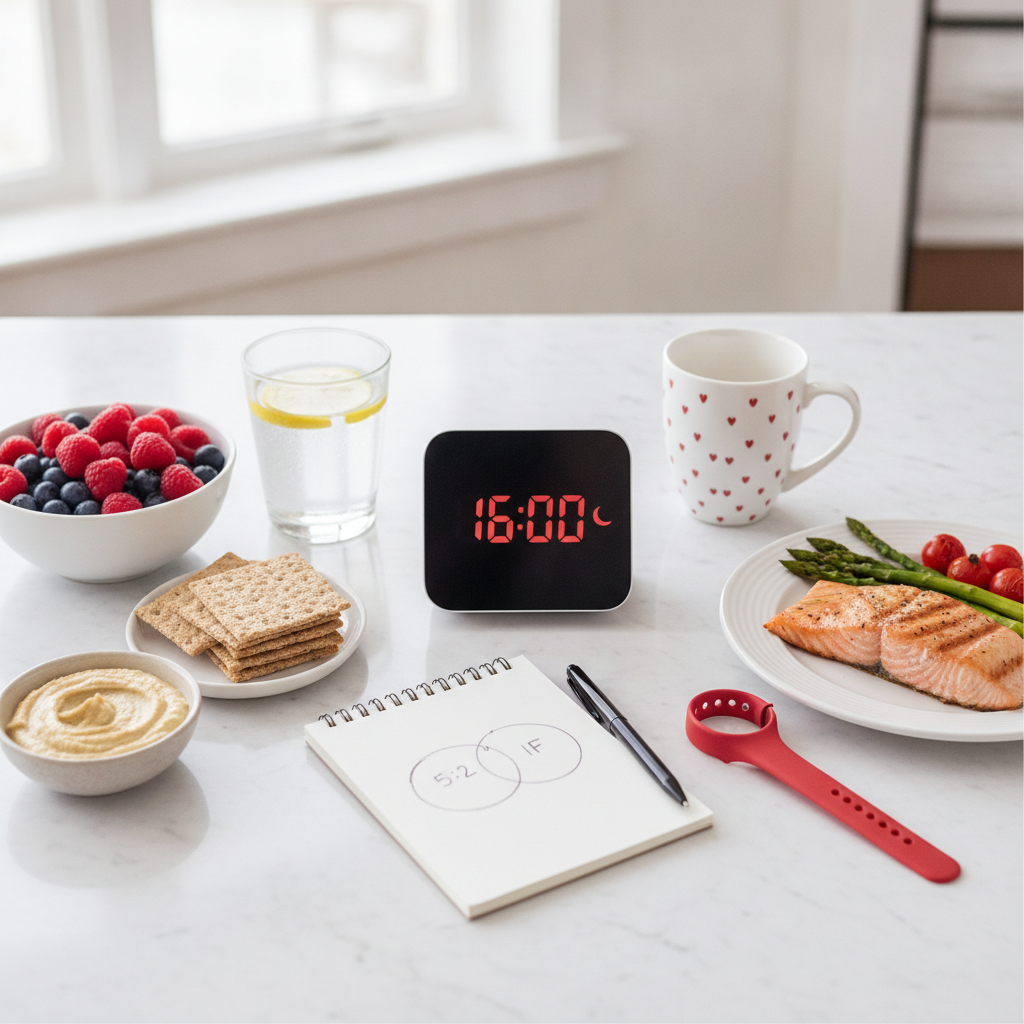
The 5:2 diet is one of the most recognizable intermittent fasting approaches in the world — five days of normal eating, two days of sharp calorie restriction. Popularized through mainstream books and media, the 5 2 diet appeals to people who want structured fasting benefits without compressing every single day into a narrow eating window.
If you have searched for the 5 2 diet because daily 16:8 feels awkward with breakfast meetings, or because you like the psychological freedom of “normal” days, this guide walks through how 5:2 actually works, what to eat on the two restricted days, how to place those days on a calendar, evidence-informed expectations, and practical tracking so the plan survives month two.
What Is the 5:2 Diet?
The 5:2 diet is a form of intermittent energy restriction. You eat your usual maintenance-oriented diet on five days each week. On the remaining two days, you limit intake to approximately 500 calories if you are a woman or 600 calories if you are a man in classic popular protocols — numbers that originated as rough guides rather than immutable medical law. Those two days should be non-consecutive for better adherence and recovery (for example, Monday and Thursday).
Unlike daily time-restricted eating, the 5:2 diet does not require skipping breakfast every morning. On normal days, meal timing can look like anyone else’s. The intermittent stress sits on two calendar days you choose and prepare for.
This makes 5:2 a weekly rhythm rather than a daily rhythm. Some people find weekly rhythms easier to remember and schedule around social life. Others prefer the metabolic steadiness of daily 16:8. Neither is universally superior; preference and lifestyle decide.
Important clarification: on fasting days you are typically still eating small meals — this is not a mandatory water-only fast. Modified restriction with planned food is what most real-world 5:2 practice looks like.
How the 5:2 Diet Works Physiologically
On restricted days, caloric intake drops substantially, insulin demand falls relative to normal eating days, and the body increases reliance on stored energy. Across a full week, the two low days can create a meaningful energy deficit if the five normal days do not turn into compensatory feasts.
Metabolic health markers such as insulin sensitivity and body weight have improved in studies of intermittent energy restriction protocols that resemble 5:2, particularly when participants adhere and food quality is reasonable. Individual responses vary with baseline diet, sleep, medications, and activity.
Hunger on fasting days is expected, especially in week one. Ghrelin patterns adapt for many people by weeks two to three if sleep and hydration are solid. The five normal days help psychologically — you are not “dieting” forever in sensation the way continuous severe restriction can feel — but those days still require adult portions.
Muscle retention depends heavily on protein across the week and resistance training. Do not treat fasting days as protein-free days simply because calories are low. Prioritize protein within the 500–600 calorie budget.
5:2 Diet vs 16:8 and Other Fasting Styles
5:2 vs 16:8. Sixteen-eight asks for daily consistency and offers daily hunger adaptation. Five-two asks for two harder days and five easier ones. Choose 16:8 if you like a daily habit and night-time kitchen closure. Choose the 5:2 diet if breakfast is important most days and you can defend two planned low-calorie days.
5:2 vs alternate day fasting. ADF restricts roughly every other day — more frequent intensity than 5:2. Five-two is generally more socially compatible.
5:2 vs continuous calorie counting. Five-two concentrates restriction. Continuous dieting spreads it. Some brains prefer concentrated discomfort with clear endpoints at midnight of a fasting day.
If you are a beginner with no fasting experience, you can start with 5:2, but many clinicians and coaches still suggest tasting daily overnight fasting (12–14 hours) first so hunger is not completely novel on day one of 500 calories.
How to Start the 5:2 Diet Step by Step
1. Choose your two days. Non-consecutive midweek days are popular: Monday/Thursday or Tuesday/Friday. Avoid stacking fasting days onto your heaviest training days or biggest social nights at the start.
2. Set calorie targets realistically. Classic guidance is ~500–600 calories on fasting days. If that feels medically or personally inappropriate, speak with a clinician. Some people use a slightly higher modified allowance while learning; purity is less important than not quitting in five days.
3. Plan menus before the week begins. Fasting-day decision fatigue causes broken plans. Write exact meals.
4. Eat protein-first meals. Examples: egg white omelet with vegetables; grilled white fish with a large salad and vinegar dressing; nonfat Greek yogurt with berries portioned to fit the budget; broth-based vegetable soup with shredded chicken.
5. Hydrate aggressively. Water, black coffee, and tea help. Hunger often softens with fluids.
6. Keep normal days truly normal — not binge days. Eat until satisfied with balanced plates. The 5 2 diet fails when normal days average 1,000 calories above maintenance.
7. Track both day types. Logging prevents “I think I fasted Tuesday” ambiguity. The Easy Fast app lets you time restricted periods and review weekly history. For 5:2, use custom timing around your fasting days and keep the record on your device — private, account-free tracking that matches a health habit you may not want in the cloud.
8. Review at four weeks. Assess weight trend, waist, energy, mood, and adherence percentage. Adjust day selection or meal composition before abandoning the method entirely.
What to Eat on 5:2 Fasting Days
Think high satiety per calorie.
Breakfast options (if you eat on fasting mornings): Greek yogurt portion carefully weighed; eggs with spinach; a protein shake that fits macros and calories.
Lunch ideas: Large vegetable salad with tuna or chicken breast; miso or vegetable soup with added lean protein; turkey lettuce wraps.
Dinner ideas: White fish and non-starchy vegetables; tofu and broccoli with low-calorie seasoning; shrimp and cucumber salad.
Use herbs, spices, chili, mustard, vinegar, and citrus for flavor. Be careful with oils and nut butters — teaspoons add up fast inside a 500-calorie day.
Distribute calories across one, two, or three small meals depending on what reduces your hunger best. Some prefer one larger evening meal; others need a split to function at work. Experiment in week two.
Training, Work, and Social Life on the 5:2 Diet
Schedule harder workouts on normal eating days when possible. On fasting days, walking and light mobility are usually better than personal-record attempts. If you must train fasted-day style, shorten the session and watch for dizziness.
At work, protect fasting days with pre-packed food so office snacks do not rewrite the plan. Tell close coworkers you are on a light-eating day if that reduces doughnut pressure — or say nothing and simply stick to your containers.
For social evenings, place fasting days away from standing dinner dates. The 5:2 diet is flexible enough to move a fasting day by twenty-four hours when life requires it. Consistency across months beats rigid perfection across a ruined week.
Alcohol on fasting days is a poor use of a tiny calorie budget and impairs judgment. Save drinks for normal days, and still moderate.
Common 5:2 Diet Mistakes
Compensatory feast days. The phrase “normal eating” does not mean unsupervised excess. Mindful plates on five days keep the weekly math working.
Ultra-low protein on fasting days. Prioritize protein even when calories are scarce.
Back-to-back fasting days every week. Non-consecutive days improve recovery and mood for most people.
No prep. Entering a fasting day without a written menu predicts cereal-and-regret evenings.
Comparing your scale to someone on ADF or OMAD. Different intermittent tools, different paces. Judge 5:2 by your adherence and health markers.
Skipping tracking. Easy Fast or another simple log makes fasting days official. Memory is biased toward optimism.
Who Should Avoid or Modify the 5:2 Diet
Avoid unsupervised 5:2 if you are pregnant, breastfeeding, underweight, under eighteen, or have a history of eating disorders. People with diabetes or on glucose-affecting medications need medical supervision because low intake days change risk profiles. If very low calorie days trigger binge-restrict cycles, choose daily time-restricted eating instead and seek support.
Older adults and people with complex medical histories should discuss intermittent energy restriction with a clinician before starting.
A Sample 5:2 Week You Can Copy
Use this as a template, then personalize.
Monday (fasting day, ~500–600 kcal): Morning black coffee and water; lunch of large salad with tuna; dinner of broth-based vegetable soup with shredded chicken; herbal tea in the evening. Light walk only.
Tuesday–Wednesday (normal days): Protein at each meal, vegetables at lunch and dinner, carbs around workouts, dessert optional in a planned portion. Strength training on one of these days.
Thursday (fasting day): Similar structure to Monday with different proteins — Greek yogurt early, white fish and vegetables later — so menus do not feel identical and punitive.
Friday–Sunday (normal days): Social meals allowed with mindful portions. If Saturday dinner is large, keep Sunday lunch protein-forward and reverse any urge to “start over” with an unplanned third fasting day. Two scheduled days are enough.
Batch-cook proteins on Sunday so Monday and Thursday never begin with an empty fridge. Prep is the difference between a theoretical 5:2 diet and one you actually finish.
Progress Expectations and Plateaus
Early scale changes on the 5:2 diet often include water shifts around fasting days. Judge progress by multi-week trends. If four weeks of honest adherence produce no change in waist or average weight, inspect normal-day intake before abandoning the method. Many people underestimate snacks and drinks on the five “free” days. Others under-sleep and over-hunger into larger portions. Fix those variables, keep tracking with a private timer, and reassess.
Frequently Asked Questions
Can I drink coffee on 5:2 diet fasting days?
Yes — black coffee and unsweetened tea are commonly used and can help appetite control. Caloric add-ins count toward your fasting-day budget. If cream is essential, measure it and reduce food calories accordingly.
Is the 5:2 diet good for beginners?
It can be, especially for people who dislike daily eating windows. Absolute beginners who panic in hunger may prefer starting with overnight 12–14 hour fasts, then adopting classic 5:2. Preparation and realistic fasting-day menus matter more than labels.
How much weight can I lose on the 5 2 diet?
Loss varies widely based on starting point, normal-day intake, activity, and adherence. A sustainable pace is generally preferable to dramatic early drops driven by water weight. Focus on four-week trends and waist measurements alongside the scale.
Can I change which days I fast each week?
Yes. The method needs two restricted days most weeks, not identical calendar squares forever. Move days for travel and events, then return to a default pattern when life settles.
Should women and men use different calorie targets on the 5:2 diet?
Popular guidance often uses ~500 for women and ~600 for men on fasting days, reflecting average needs in consumer protocols. Individual needs differ. Medical conditions, size, and activity may justify clinician-guided modifications. Do not treat magazine numbers as sacred if they make you unwell.
How do I track the 5:2 diet effectively?
Mark fasting days on a calendar and time intake windows or fasting periods with an app. Easy Fast stores schedules and history on your device so you can see whether you actually completed two restricted days each week without creating an online account.
What should I eat on normal days of the 5:2 diet?
Balanced meals with adequate protein, vegetables, fruits, and smart carbs. Eat to satisfaction. Include foods you enjoy so the diet remains culturally and emotionally sustainable. Normal days are still health days — just not 500-calorie days.
The 5:2 diet offers a weekly intermittent fasting structure that many people find more livable than daily aggressive windows. Choose two non-consecutive days, plan high-protein low-calorie menus, keep the five normal days honest, train smarter around the calendar, and track completion without obsessing over perfection. When you want a private, simple way to keep fasting days visible, download Easy Fast and let on-device history show whether your 5 2 diet is a real weekly practice — not just a good intention.