Dirty Fasting Guide: What It Is, Pros, Cons, and How to Do It
Dirty fasting allows small calories during a fasting window. Learn what counts, how it differs from clean fasting, and when the tradeoff makes sense.
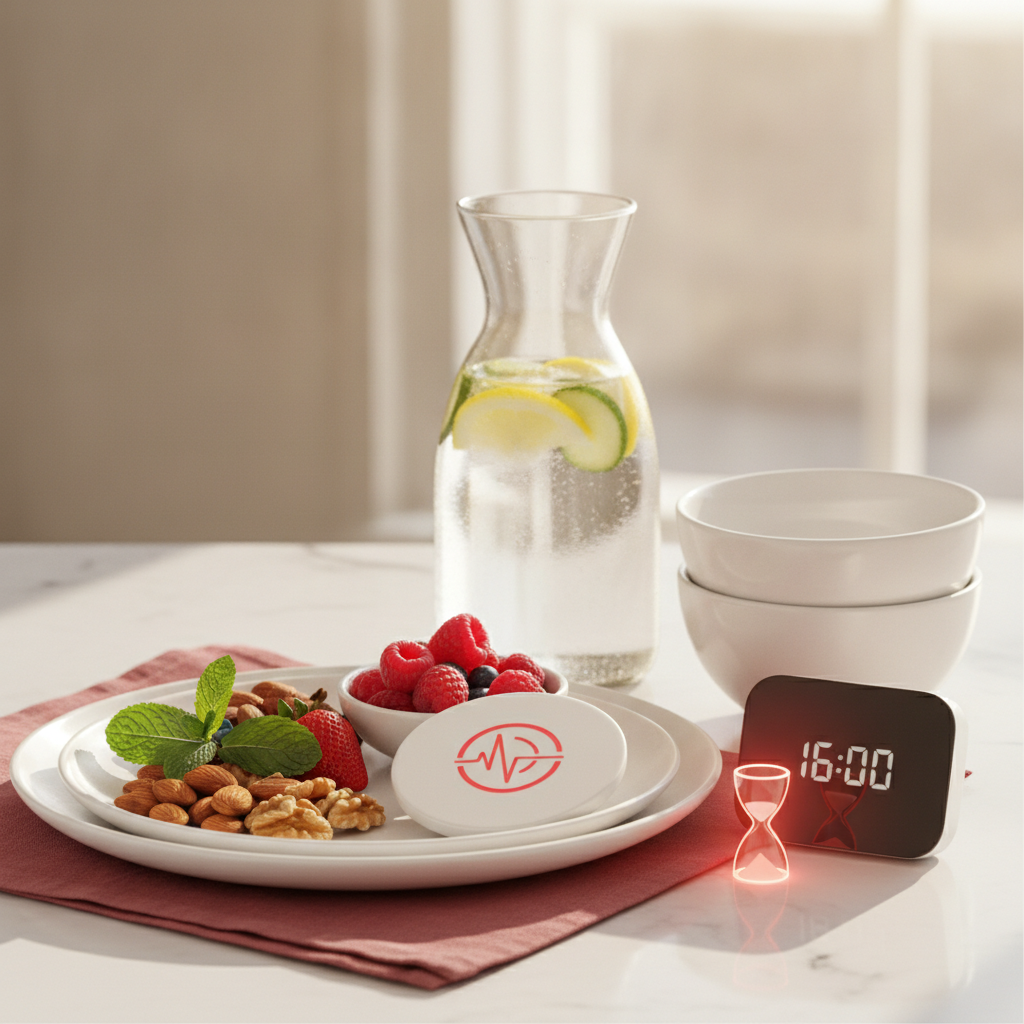
Dirty fasting is a popular, informal name for intermittent fasting that allows a small number of calories during the nominal fasting window — often from cream in coffee, a splash of milk, bone broth, or similar minor intake. Strict or “clean” fasting allows only non-caloric drinks. Dirty fasting sits in the pragmatic middle: you keep a long stretch without meals while accepting that your physiology is not in a pure zero-calorie state.
People search for dirty fasting because they tried clean fasting, hated black coffee, and nearly quit. Others want autophagy talk without giving up morning rituals. This guide explains what dirty fasting can and cannot do, how to set personal rules that prevent the concept from turning into all-day snacking, and how to decide whether dirty or clean better matches your goal.
What Dirty Fasting Means
There is no official clinical definition, which is why arguments online never end. In practice, dirty fasting usually means:
- You maintain a compressed eating schedule such as 16:8 or 18:6.
- During the fasting span, you may consume roughly under 50–100 calories (sometimes people cite lower caps).
- Those calories typically come from fat or broth rather than sugary drinks or solid snacks.
The intent is to blunt hunger and improve adherence while still avoiding a full meal. Pureists correctly note that any calories interrupt a strict fast. Pragmatists correctly note that perfect protocols people abandon help no one.
Dirty fasting is best understood as modified time-restricted eating, not as a loophole that magically preserves every proposed fasting benefit. Insulin responses, ketone trajectories, and autophagy markers can shift with even small intakes, and individual responses vary. If your primary goal is adherence and reduced eating window length, dirty fasting can still be useful. If your primary goal is maximal fasting physiology for a defined experiment, clean fasting is clearer.
Dirty Fasting vs Clean Fasting
Clean fasting minimizes ambiguity: water, plain coffee, plain tea. Measurements and self-experiments are easier to interpret. Some people also report cleaner appetite signals when they stop milky coffee calories.
Dirty fasting reduces friction for people who otherwise break entirely at 10 a.m. It can preserve social coffee norms. It may support a calorie deficit if it prevents chaotic binge breakfasts after willpower collapse.
Choose clean when you feel fine without additives, when you are running a short supervised protocol, or when you notice dirty calories creep upward every week. Choose dirty when black coffee makes the whole project intolerable and you would rather keep sixteen hours without solid food than quit in week one.
Neither choice makes you morally superior. Clarity matters more than tribal labeling. Write your rule: “During the fast I allow up to X calories from coffee add-ins, nothing else.” Without a written cap, dirty fasting often becomes grazing.
How to Practice Dirty Fasting Without Sliding Into Grazing
Pick a schedule first. Dirty does not replace structure. Noon to 8 p.m. eating with a dirty morning still needs a closed kitchen at night.
Cap the dirty calories. Many people use a personal ceiling around 50 calories, sometimes up to 100. Measure cream with a spoon for a week so “a splash” does not become a quarter cup.
Prefer ingredients that are satiating without sweetness. Heavy cream or butter in coffee affects people differently than flavored syrups, which often increase cravings. Sweet dirty fasting tends to fail faster.
Keep dirty intake early or batched, not scattered as six tiny snacks across the fast. Constant flavor stimulation keeps the brain in food mode.
Protect the eating window quality. Dirty fasting does not excuse ultra-processed evenings. Protein and plants still matter.
Reassess every two weeks. If weight, energy, or glucose goals (when clinically relevant) stall, test ten clean days and compare adherence and subjective hunger.
Example morning: water on waking; coffee with one measured tablespoon of cream; walk; work; eat first meal at noon. That is dirty fasting with a boundary. Example failure mode: cream coffee, bone broth at 10, cheese bite at 11, “still fasting” narrative at lunch — that is just disordered meal timing with branding.
Potential Benefits and Tradeoffs
Possible benefits: higher adherence; smoother transition for beginners; retained ritual comfort; still fewer eating hours than a graze-all-day pattern; sometimes easier workplace fit.
Tradeoffs: some metabolic fasting effects may attenuate; calorie totals can drift; self-deception risk; harder to compare notes with clean-fasting research; cream-and-butter calories still count toward energy balance.
For weight loss, dirty fasting can work if total daily energy remains appropriate. It fails when dirty calories plus window calories exceed needs. For people chasing therapeutic ketosis, dirty additives may slow the transition. For autophagy-focused experiments, even small protein or calorie loads may be unwanted — though popular autophagy hour claims are often oversimplified anyway.
Women who find clean fasting overly stressful sometimes tolerate dirty versions better in high-stress seasons. Still watch cycle regularity, sleep, and mood. “Less stressful” should be validated by lived metrics, not assumed forever.
Who Should Prefer Clean — or Skip Experimentation
Prefer clean fasting if you feel good on it already, if you are collecting careful personal data, or if dirty calories reliably escalate. Skip aggressive fasting experiments altogether if you are pregnant, underweight, have an eating-disorder history, or take medications that require food timing guidance from a clinician.
Dirty fasting is a poor match for anyone using the label to hide grazing. If your “dirty fast” includes muffins because they are “just a little,” you need a different intervention: meal planning and behavioral support, not a rebrand.
Athletes leaning on morning cream coffees while under-fueling training should also be careful. Performance under-eating can wear a fasting costume.
Track the Window Honestly with Easy Fast
Whether you choose dirty or clean, the eating window still needs honest timestamps. The Easy Fast app lets you start and stop fasts with one tap, use common schedule presets, and review history stored on your device. On-device privacy means your timing data is not uploaded into an account profile — useful when health routines feel personal.
Log your official fast start after your last real meal, not after your last cream coffee if you want clean interpretation — or decide explicitly that dirty calories sit inside the fasting label for adherence tracking. Consistency of definition matters. Easy Fast keeps the clock visible so dirty fasting does not quietly expand until only four true fasting hours remain.
Download Easy Fast, write your dirty-calorie rule on day one, and test the approach for two weeks before rewriting your identity around it. Pragmatism works best when it is specific.
Dirty fasting can be a bridge that keeps people practicing intermittent fasting for months instead of days. It can also become a slippery slope. Use clear caps, protect night kitchens, fuel well when you eat, and let logged hours — not online arguments — decide whether dirty is serving your goals.
Give the protocol enough consistent repetitions to learn your personal response before you declare it incompatible with your life. Early discomfort often fades; persistent red-flag symptoms deserve downtime and medical advice instead of prideful grinding. Aim for steady practice across ordinary weeks rather than perfect streak aesthetics alone. Clear timing logs help you see reality, including the days you intentionally flexed.
Ultimately, fasting is a timing skill placed next to nutrition skill. Neither replaces the other. Pair a clear window with decent meals and you outperform complicated stacks that look impressive and last nine days. Aim for steady practice across ordinary weeks rather than perfect streak aesthetics alone. Clear timing logs help you see reality, including the days you intentionally flexed.
Ultimately, fasting is a timing skill placed next to nutrition skill. Neither replaces the other. Pair a clear window with decent meals and you outperform complicated stacks that look impressive and last nine days. Aim for steady practice across ordinary weeks rather than perfect streak aesthetics alone. Clear timing logs help you see reality, including the days you intentionally flexed.
Ultimately, fasting is a timing skill placed next to nutrition skill. Neither replaces the other. Pair a clear window with decent meals and you outperform complicated stacks that look impressive and last nine days. Aim for steady practice across ordinary weeks rather than perfect streak aesthetics alone. Clear timing logs help you see reality, including the days you intentionally flexed.
Ultimately, fasting is a timing skill placed next to nutrition skill. Neither replaces the other. Pair a clear window with decent meals and you outperform complicated stacks that look impressive and last nine days. Aim for steady practice across ordinary weeks rather than perfect streak aesthetics alone. Clear timing logs help you see reality, including the days you intentionally flexed.
Ultimately, fasting is a timing skill placed next to nutrition skill. Neither replaces the other. Pair a clear window with decent meals and you outperform complicated stacks that look impressive and last nine days. Aim for steady practice across ordinary weeks rather than perfect streak aesthetics alone. Clear timing logs help you see reality, including the days you intentionally flexed.
Ultimately, fasting is a timing skill placed next to nutrition skill. Neither replaces the other. Pair a clear window with decent meals and you outperform complicated stacks that look impressive and last nine days. Aim for steady practice across ordinary weeks rather than perfect streak aesthetics alone. Clear timing logs help you see reality, including the days you intentionally flexed.
Ultimately, fasting is a timing skill placed next to nutrition skill. Neither replaces the other. Pair a clear window with decent meals and you outperform complicated stacks that look impressive and last nine days. Aim for steady practice across ordinary weeks rather than perfect streak aesthetics alone. Clear timing logs help you see reality, including the days you intentionally flexed.
Ultimately, fasting is a timing skill placed next to nutrition skill. Neither replaces the other. Pair a clear window with decent meals and you outperform complicated stacks that look impressive and last nine days. Aim for steady practice across ordinary weeks rather than perfect streak aesthetics alone. Clear timing logs help you see reality, including the days you intentionally flexed.
Ultimately, fasting is a timing skill placed next to nutrition skill. Neither replaces the other. Pair a clear window with decent meals and you outperform complicated stacks that look impressive and last nine days. Aim for steady practice across ordinary weeks rather than perfect streak aesthetics alone. Clear timing logs help you see reality, including the days you intentionally flexed.
Ultimately, fasting is a timing skill placed next to nutrition skill. Neither replaces the other. Pair a clear window with decent meals and you outperform complicated stacks that look impressive and last nine days. Aim for steady practice across ordinary weeks rather than perfect streak aesthetics alone. Clear timing logs help you see reality, including the days you intentionally flexed.
Frequently Asked Questions
What is dirty fasting?
Dirty fasting is intermittent fasting that allows small caloric intakes during the fasting window, commonly cream in coffee or similar minor calories, while still avoiding full meals until the eating window opens.
Does dirty fasting still work for weight loss?
It can, if it helps you maintain a shorter eating window and your total calories remain in line with your goal. Cream calories count. Track trends for several weeks rather than assuming the label alone produces fat loss.
How many calories break a fast?
Any calories interrupt a strict fast. Dirty fasting deliberately accepts a limited interruption. Choose a personal ceiling and stick to it rather than chasing a universal magic number from social media.
Is bone broth dirty fasting?
Bone broth contains calories and amino acids, so it is not clean fasting. Some people include a small measured portion as their dirty allowance. Others reserve broth for the eating window only.
Is dirty fasting better for beginners?
Sometimes. Beginners who hate black coffee may adhere longer with a measured dirty option. Beginners who tend to rationalize snacks may do better with clean rules that remove gray areas.
Can I dirty fast every day?
Yes if your rules stay stable and outcomes look good. Reassess if calories creep, hunger worsens, or progress stalls. Periodically testing clean days can reveal whether dirty add-ins still help.
How should I track dirty fasting?
Track the same start and stop times you would for clean fasting, and separately keep your dirty-calorie rule honest. Easy Fast provides private on-device timers and history so the window length stays visible while you refine the details.